Self-awareness is a key component of personal growth, career development, and emotional intelligence. However, many individuals struggle to fully understand themselves because they are blind to certain aspects of their own personality. The Johari Window is a powerful psychological tool that helps individuals see themselves more clearly by comparing how they view themselves with how others perceive them.
The Johari Window provides a structured way to explore and identify your blind spots, strengths, and areas for development, all of which can significantly impact your personal and professional life. Whether you're looking to improve communication skills, enhance team dynamics, or simply gain a deeper understanding of yourself, this tool offers valuable insights. In this article, we'll explore how the Johari Window works, its core features, and how it can be used in various aspects of life.
What is the Johari Window?
The Johari Window is a psychological model created by Joseph Luft and Harry Ingham in 1955, designed to help individuals better understand themselves and their relationships with others. The model is based on the idea that self-awareness is crucial for personal growth and that understanding how others see us is just as important as understanding ourselves.
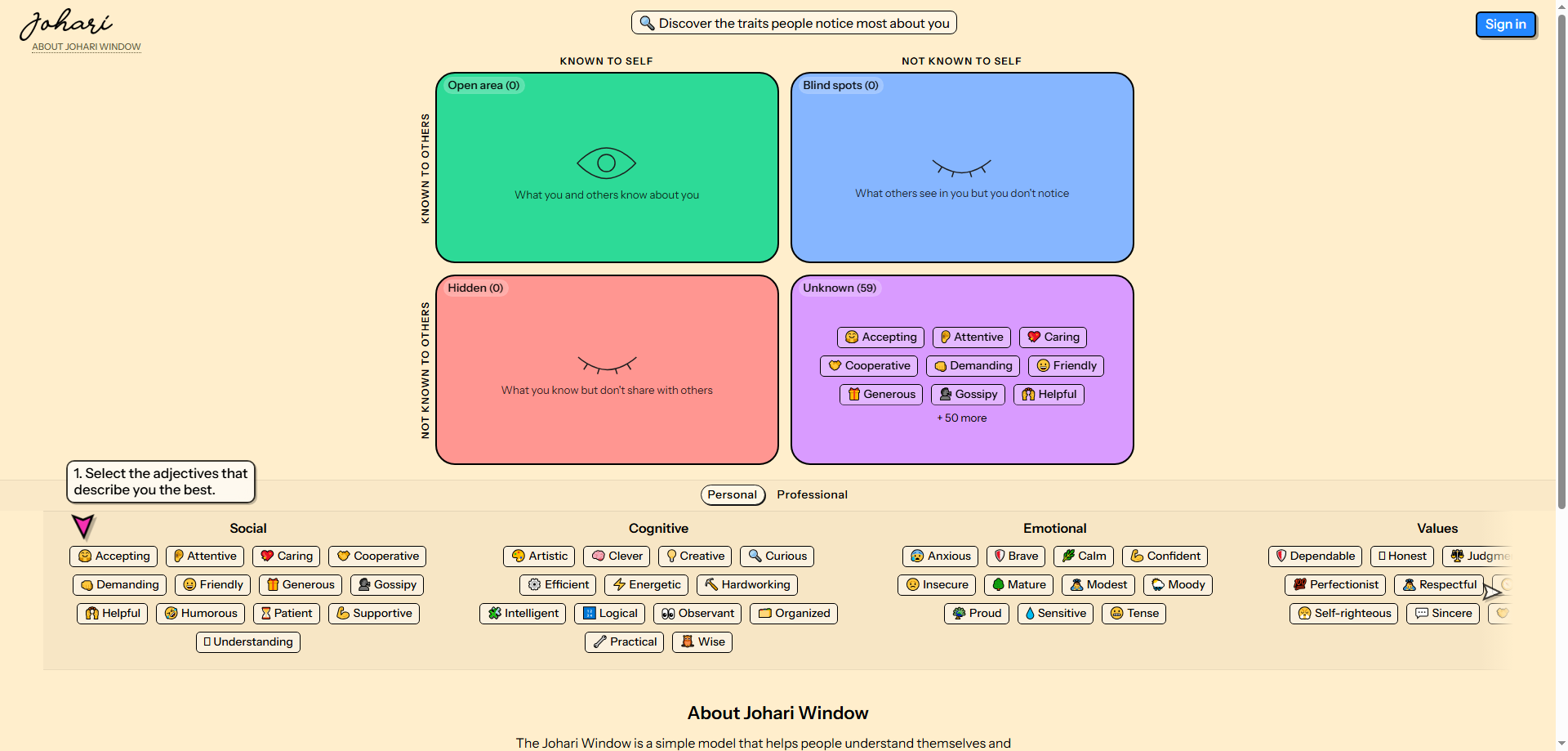
The Johari Window divides self-awareness into four distinct quadrants:
- Open Area (Arena): The aspects of yourself that are known to both you and others. These are the traits and behaviors you are aware of and that others can also see.
- Blind Spot: The aspects of yourself that others are aware of, but you are not. These can include behaviors or traits that may be hindering your personal or professional growth.
- Hidden Area (Façade): The parts of yourself that you are aware of but choose to keep hidden from others. This could be personal secrets, fears, or insecurities.
- Unknown Area: The traits and behaviors that neither you nor others are aware of. These can be potential strengths or areas for growth that you haven't yet discovered.
How Does the Johari Window Work?
The key to the Johari Window is feedback—gathering insights from others and comparing them with your own perceptions. By exploring these quadrants, you can gain a clearer understanding of your personality, behaviors, and how you come across to others. The Johari Window helps to reveal blind spots and hidden strengths, ultimately leading to increased self-awareness and personal growth.
1. Self-Assessment
To begin the process, individuals are asked to evaluate and describe their own personality traits. This self-assessment involves identifying both strengths and weaknesses, how you perceive yourself in various situations, and what you believe others might think of you. This is the first step in opening up your Open Area, where the traits you recognize about yourself are shared with others.
2. Gathering Feedback
Next, you invite feedback from others—whether it’s from friends, family, colleagues, or mentors. These individuals provide their own perceptions of your personality, skills, and behaviors. The goal is to understand how others see you, especially in areas that you may be unaware of.
3. Visualizing the Results
Once the self-assessment and feedback are gathered, the Johari Window is visualized as a grid with four quadrants. This helps individuals see where their self-perception aligns with others’ views, and where discrepancies exist. The larger the Open Area, the more self-aware and transparent you are with others. The smaller the Blind Spot and Hidden Area, the better you understand your impact on others and the more genuine your relationships are.
Core Features of the Johari Window
1. Self-Discovery and Increased Self-Awareness
The primary benefit of the Johari Window is that it encourages individuals to explore aspects of their personality that they may not have been aware of. Through feedback, people can uncover blind spots—traits they didn’t know they had but others easily observe. By identifying these blind spots, you can work on improving areas of your life that you may have neglected or not recognized as important.
2. Enhanced Communication Skills
The Johari Window can help improve your communication skills. By understanding how you are perceived by others, you can adjust your communication style to be more effective and empathetic. Whether you're in a personal or professional setting, improving how you relate to others and understanding how your message is received can greatly enhance your relationships.
3. Better Team Dynamics and Collaboration
In teams, the Johari Window can be used to foster a more collaborative and open environment. When team members are aware of each other’s strengths, weaknesses, and blind spots, they can work together more effectively. The feedback process helps identify areas where team members can complement each other and make more informed decisions.
4. Identification of Strengths and Areas for Growth
The Johari Window can also help you identify strengths that you may not have recognized in yourself, as well as weaknesses or areas for improvement. By exploring your Hidden Area, you can decide whether to open up about certain traits or fears and make conscious efforts to work on them.
How to Use the Johari Window
1. Self-Assessment and Feedback
Begin by selecting a set of adjectives or traits that you believe describe your personality. Write these down and reflect on which traits are accurate. Then, share these adjectives with others to gather their feedback. You can invite feedback from colleagues, friends, mentors, or family members—people who have a good understanding of your character.
2. Analyze the Quadrants
After receiving feedback, compare your self-perceptions with the perceptions of others. Place the traits that overlap in the Open Area, while the differences will help identify traits in your Blind Spot or Hidden Area. Finally, look for any traits that neither you nor others are aware of, which could fall into the Unknown Area.
3. Open Up About Your Hidden Areas
The next step is to reduce the size of your Hidden Area by sharing more about yourself. Opening up can help others understand you better and build more authentic relationships. As you share more of yourself, you also create an opportunity to grow and improve based on feedback.
4. Address Your Blind Spots
Focus on working on the traits that show up in your Blind Spot. By becoming aware of these traits, you can consciously work on improving them. This might involve seeking additional feedback, asking for guidance, or adjusting your behaviors to make sure you're presenting yourself in the best possible light.
Practical Applications of the Johari Window
1. Career Development and Job Interviews
Before a job interview, you can use the Johari Window to assess your strengths and weaknesses. By comparing how you see yourself with feedback from others, you can gain insight into areas where you need to improve or highlight specific strengths. This self-awareness will help you present a more authentic version of yourself during interviews.
2. Team Building and Collaboration
In a newly formed team, using the Johari Window can help members better understand each other. By exchanging feedback, team members can identify complementary skills, potential conflicts, and areas for improvement, thus fostering better collaboration and communication.
3. Enhancing Relationships
For improving personal relationships, the Johari Window can reveal how others perceive your actions, allowing you to adjust your behavior and communication style to better align with their expectations. If you feel misunderstood, this tool helps clarify the differences between your self-perception and others' viewpoints.
4. Personal Growth and Self-Improvement
The Johari Window is an invaluable tool for personal growth. It encourages self-reflection and helps uncover blind spots or hidden areas that may be limiting your potential. By addressing these areas, you can unlock your full capabilities and reach higher levels of personal development.
Conclusion
The Johari Window is a transformative tool that enhances self-awareness and fosters better relationships, communication, and personal growth. Whether you're looking to improve your career prospects, enhance team dynamics, or simply understand yourself better, the Johari Window provides valuable insights that help you become more mindful of how you relate to others.
By using this simple yet powerful model, you can identify your strengths, address your weaknesses, and ultimately become more self-aware—leading to stronger relationships, improved emotional intelligence, and greater success in both personal and professional life.