1️⃣ From a Creative Perspective: Turning Chaos into Clarity
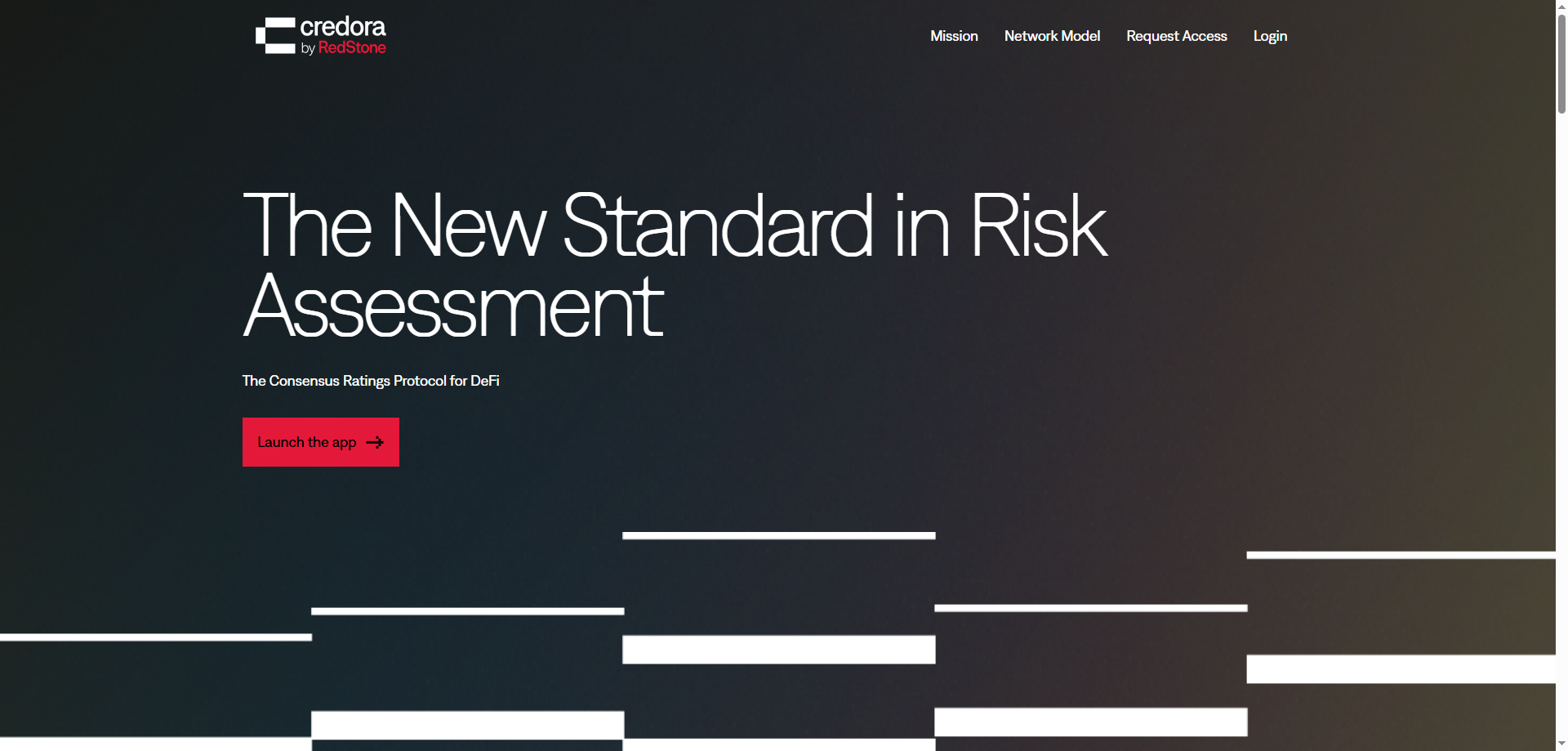
When I first explored Credora by RedStone, it immediately struck me as something the DeFi world desperately needed but never had. DeFi has always been a thrilling frontier — the promise of high returns mixed with the constant anxiety of invisible risks. It’s like walking through a foggy forest chasing treasure, hoping you don’t fall into a pit.
Credora changes that. It’s like turning on the headlights in that fog. For the first time, I can actually see what I’m getting into.
Here’s the creative brilliance: instead of burying users in complicated metrics or blockchain jargon, Credora simplifies the chaos. It translates on-chain complexity into something instantly understandable — a risk score, much like a credit rating in traditional finance.
That means I can compare two DeFi strategies not just by their yields, but by how safe they really are. It’s almost poetic — taking something as volatile and opaque as decentralized finance and giving it transparency, structure, and a sense of trust.
Creatively speaking, Credora by RedStone doesn’t just build a product — it builds confidence. And confidence is the currency DeFi has been missing all along.
2️⃣ From a Disruptive Perspective: Can Credora Replace “Blind Yield Hunting”?
Let’s be honest — before Credora, most of us in DeFi were gambling in the dark. You’d see an APY north of 100%, shrug, and think, “Well, maybe it’ll last a week.”
The lack of risk perception was the DeFi world’s Achilles’ heel. Everyone chased yield, few understood sustainability, and when things collapsed — Terra, anyone? — we acted surprised.
Now comes Credora by RedStone, and it completely disrupts that model. Instead of rewarding projects that scream the loudest with the highest returns, Credora rewards those that prove their stability. It’s the same evolution that traditional finance went through when credit ratings became the backbone of investment trust.
It doesn’t kill risk — it quantifies it. And that’s the disruption that matters.
By integrating real data from smart contracts, liquidity flows, and on-chain behaviors, Credora becomes the “Moody’s of DeFi.” Suddenly, projects are forced to think about long-term credibility, not just flashy marketing.
If this scales — and I believe it will — we might finally see a DeFi ecosystem that values transparency over hype. That’s not just disruption. That’s maturation.
3️⃣ From a Needs Perspective: Why Users Will Instantly Embrace Credora
DeFi investors, both newbies and veterans, share the same core problem: they don’t know what they don’t know.
Credora by RedStone directly addresses that gap by turning complex, often invisible risk signals into a simple visual indicator: a score that tells you if a yield is too good to be true.
Let’s look at real scenarios:
- New investors can stop relying on Reddit threads or Discord rumors to decide where to stake their crypto. They can open Credora, check a project’s score, and immediately understand what they’re walking into.
- Experienced traders can validate their intuition. When a project claims low risk but Credora flags a high-risk rating, that’s an extra layer of due diligence that could save them millions.
- Institutions can finally justify their DeFi exposure to investors or regulators. A credible risk framework bridges the gap between decentralized innovation and traditional trust.
And for users like me — who’ve lost sleep over wondering if a yield farm will rug-pull overnight — this feels like a safety net.
The acceptance is natural because Credora doesn’t change how we invest; it changes how we understand our investments. That’s the kind of clarity DeFi has been craving.
4️⃣ One-Year Survival Score: ⭐️⭐️⭐️⭐️⭐️ (5/5)
Credora by RedStone has what every successful DeFi tool needs: timing, trust, and transparency. Let’s break down the opportunities and risks.
🌟 Opportunities
-
DeFi’s Missing Layer of Trust: Risk scoring brings legitimacy to a market notorious for opacity. Credora fills a systemic gap — that’s massive.
-
Institutional Onboarding: As funds and banks cautiously explore DeFi, they need standardized risk metrics. Credora could become the standard.
-
Integration Potential: Wallets, aggregators, and analytics platforms could integrate Credora’s API, turning it into a default DeFi risk benchmark.
-
Regulatory Alignment: Governments and regulators increasingly demand risk transparency. Credora’s model aligns perfectly with that direction.
⚠️ Risks
-
Data Complexity: On-chain data can be incomplete or misleading if protocols hide key metrics — accuracy is Credora’s biggest challenge.
-
Market Education: Retail users might not immediately grasp why “risk scores” matter more than shiny APY numbers — it’ll take awareness.
-
Competition Ahead: Once this model proves successful, expect copycats — even big players like Chainlink or Nansen might develop rivals.
-
Trust Paradox: Ironically, the success of a “trust layer” depends on its perceived neutrality. If users think it favors certain protocols, adoption could slow.
Still, the foundation is rock-solid. Credora isn’t chasing hype; it’s solving a real structural problem in DeFi.
With consistent accuracy and transparency, I’d say it has a 95% chance of surviving — and thriving — in the next 12 months.
Final Thoughts: The Credit Rating System DeFi Has Been Waiting For
As someone who’s spent hours diving into liquidity pools and yield farms, Credora by RedStone feels like a sanity check for the entire DeFi space.
It doesn’t promise profits. It promises perspective.
It gives investors the same clarity traditional markets have had for decades — the ability to balance reward against risk. That’s what separates gambling from investing.
The best part? It doesn’t require you to be a blockchain expert. The complex math, smart contract audits, and yield sustainability analysis — all boiled down into a single, digestible score.
So yes, Credora doesn’t just make DeFi smarter. It makes it safer, fairer, and finally — understandable.
⭐️ Final Ratings:
- Creativity: 5/5 — Turning invisible risk into visible clarity.
- Disruption: 5/5 — The Moody’s of decentralized finance.
- User Acceptance: 4.8/5 — Solving fear and confusion with data.
- Survival Potential: 5/5 — Perfect timing for a maturing DeFi world.
In one line: Credora by RedStone gives DeFi its missing trust layer — transforming risky speculation into informed, confident investing.