1. From a Creative Perspective: Turning Chaos into Clarity
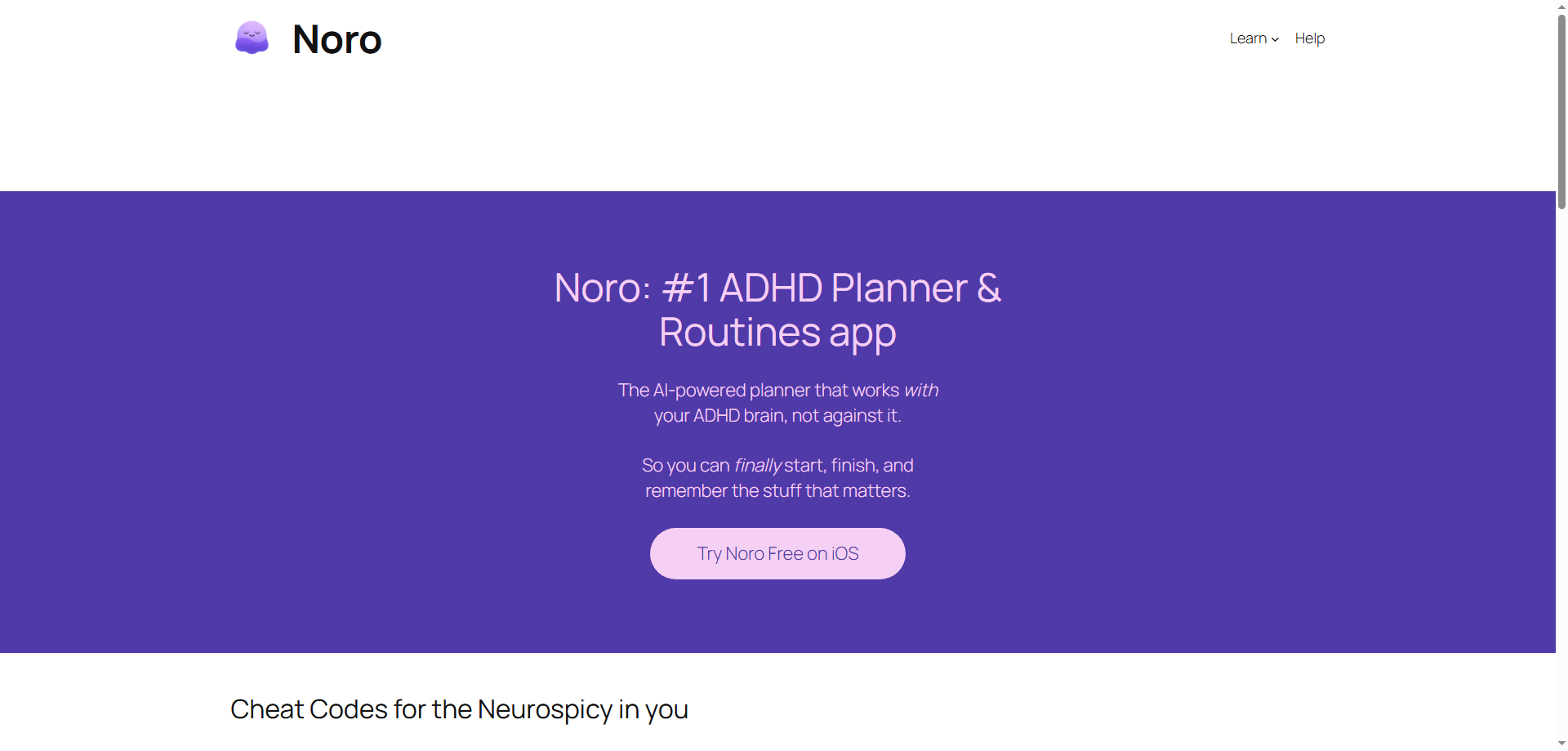
If you’re anything like me — bursting with ideas, constantly distracted, and juggling too many thoughts at once — then Noro ADHD Planner feels like a gift from the productivity gods.
Here’s the thing: my brain is a wild brainstorming session that never ends. I jump from one idea to another, and by the time I try to act on one, I’ve forgotten half of what I wanted to do. Noro changes that. It takes my random voice notes, passing thoughts, and half-finished reminders, and transforms them into a structured, prioritized, and time-estimated to-do list.
Creatively, it’s brilliant — it bridges the gap between inspiration and execution. You don’t have to slow down your thoughts to get organized. You just speak, and Noro listens, processes, and builds order from chaos.
It’s like having an AI assistant who understands not just what I’m saying, but how my brain works. It respects the nonlinear, spontaneous way ADHD and creative minds think — and then gently gives that whirlwind a direction.
Noro isn’t about forcing productivity. It’s about translating creativity into action. And that’s a beautiful thing.
2. From a Disruptive Perspective: Could Noro Replace Existing Productivity Tools?
Let’s be honest — the productivity app market is overcrowded. I’ve tried everything: Notion, Todoist, ClickUp, you name it. They all promise structure but assume your brain works in straight lines. Mine doesn’t.
That’s where Noro ADHD Planner flips the script. It’s not just a planner — it’s adaptive intelligence for neurodiverse minds. It doesn’t make you fit into a productivity system; it builds one around you.
Could it replace traditional tools? For people like me — absolutely, yes. While Notion requires setup, and Trello demands constant upkeep, Noro works on the fly. I just talk to it like a friend, and it does the heavy lifting — splitting big tasks into smaller ones, estimating time realistically, and organizing my day with empathy.
That’s the true disruption here: Noro isn’t about control — it’s about understanding. It’s productivity designed by someone who gets the chaos of ADHD and creativity alike.
It’s the first time I’ve used a planner that doesn’t guilt-trip me for being inconsistent. Instead, it supports how my brain actually operates.
So yes — in the right hands (or rather, brains), Noro could replace everything else.
3. From a Demand Perspective: Why Users Are Embracing It So Quickly
There’s a huge, underserved group out there — people with ADHD, neurodivergent thinkers, and anyone who struggles to turn ideas into action. And let’s face it, traditional time management apps just don’t work for us.
That’s why Noro ADHD Planner is hitting such a nerve. With 183 upvotes and growing discussions, it’s clear the community is excited. But it’s more than hype — it’s relief.
I’ve seen people on ADHD forums rave about how Noro finally helps them capture fleeting thoughts before they disappear. Students use it to break down assignments into bite-sized chunks. Entrepreneurs use it to manage endless ideas without burning out. And creatives? They love it because it lets them record their spontaneous bursts of inspiration without losing the thread.
I can tell from my own experience — the acceptance rate is high because it’s designed with empathy. It doesn’t scold you for being disorganized; it helps you find your rhythm.
We’ve been waiting for a planner that feels like a partner — not a parent. Noro ADHD Planner delivers exactly that.
4. One-Year Survival Forecast: ⭐️⭐️⭐️⭐️☆ (4.5 out of 5 Stars)
Let’s talk survival. Will Noro ADHD Planner still be around next year? My verdict: Absolutely — and thriving.
⭐️⭐️⭐️⭐️☆ (4.5 out of 5 Stars)
Opportunities:
- Growing awareness of neurodiversity: More people are acknowledging ADHD, executive dysfunction, and neurodivergent work styles. Noro is perfectly positioned to become the go-to tool for that audience.
- AI advantage: Its voice-to-task feature and intelligent breakdowns set it apart from traditional planners that rely on manual input.
- Emotional connection: It’s not just functional — it’s empathetic. That emotional design gives it staying power.
Risks:
- Niche perception: Some might think it’s “just for ADHD users,” which could limit broader adoption. In truth, anyone overwhelmed by chaos could benefit.
- Competition: Big players like Notion and Google are integrating AI fast. Noro must innovate quickly to keep its unique identity.
- Overreliance on AI accuracy: If its time estimates or task breakdowns miss the mark, users might lose trust — so ongoing refinement is key.
Still, the balance is overwhelmingly positive. The market for neurodiverse productivity tools is growing fast, and Noro ADHD Planner is one of the few products built specifically — and authentically — for that need.
If it continues improving user experience and expanding features (like calendar sync or emotional tracking), it’ll not only survive but lead the ADHD-friendly productivity space.
Final Thoughts
For me, Noro ADHD Planner isn’t just another productivity tool — it’s a lifeline for creative chaos.
It’s rare to find software that truly understands what it feels like to have a thousand ideas bouncing around your head but no clear starting point. Noro doesn’t judge that — it embraces it. It takes the whirlwind inside your brain and calmly turns it into a roadmap you can actually follow.
It’s smart, empathetic, and quietly revolutionary.
If you’ve ever struggled to stay organized, keep focus, or bring your creative ideas to life, Noro ADHD Planner might just be the tool that changes everything.